Black, Orange & Rather GoodA Thai chilli with a spectacular colour change, a generous harvest and plenty of flavour.
Black, Orange and Rather Good
A Thai chilli with a spectacular colour change, a generous harvest and plenty of flavour.
I was rather taken with Thai Halloween when I first came across it. The stems are almost black, the young chillies a deep purple-black, and then, rather unexpectedly, they ripen to this wonderful bright orange. At the moment my plant has both colours together, and it's quite spectacular. You can certainly see where the name comes from.
It's a relatively new variety of Capsicum annuum, although I've been unable to discover much about its origins. It's sold as a Thai chilli, but nobody seems to say who originally bred it or where it first appeared. It may well have been developed elsewhere with Thai cooking in mind.
There isn't really such a thing as a single Thai chilli, of course. Thailand has dozens of types, often with quite specific purposes in the kitchen. The tiny, fiercely hot prik kee noo is probably the best known, but there are longer, milder varieties such as prik chee fah, which translates rather charmingly as 'chilli pointing to the sky'. There are chillies for drying, others for eating fresh, and varieties chosen as much for their flavour and texture as for their heat.
What's rather surprising is that none of these chillies was originally Thai. All chillies came from the Americas, reaching Southeast Asia in the sixteenth century. Before that, Thai cooks relied on black pepper, ginger and galangal for pungency. It's difficult to imagine Thai food without chillies now, but they've only been part of the cuisine for around five hundred years.
As for Thai Halloween, the plant itself has been something of a revelation. Mine is huge now, slightly sprawling, and I've had to give it a stake to stop it collapsing under the weight of all the fruit. It started producing quite early and has carried on right through into autumn. For ages all the chillies were black, and then gradually the orange ones began appearing among them.
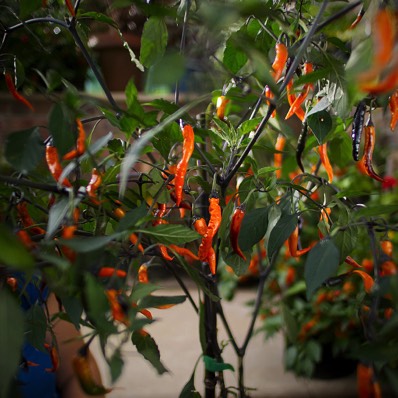
I have to admit that this one hasn't had especially careful treatment. It's been outside all summer, occasionally a little dry, occasionally rather too wet, and hasn't complained at all. We have had a particularly good summer here on the South Coast, which has certainly helped, but even allowing for that, it's been remarkably easy to grow.
And it has produced an astonishing number of chillies. I haven't counted them, but there must be well over a hundred on this one plant.
Sunlight has a part to play too. In some dark-fruited chillies, the anthocyanins are produced in response to light, so a pod exposed to strong sunshine can become almost black while a shaded one remains green. My Thai Halloween has spent the summer outdoors in full sun and the colouring has been extraordinary.
Why black before orange? Most chillies begin green because of the chlorophyll in the fruit, but some varieties also produce anthocyanins, the pigments responsible for the purples and blues in things like aubergines and blueberries. When those pigments combine with chlorophyll in the right proportions, the result can be almost black.
What's particularly curious is that the darkness isn't necessarily down to having more purple pigment. Researchers looking at black and purple peppers found that some black-fruited varieties contained vastly more chlorophyll than purple ones. It's the combination that matters.
As the fruit ripens, the chlorophyll breaks down and orange carotenoids take over. So the orange isn't simply hiding beneath the black waiting to be revealed. The fruit actually changes its pigmentation as it matures.
Flavour Profile: Halloween
Heat (Hotness): 3. A minor haunting, really. Nothing that would interest the Vatican, although you might find yourself making small involuntary noises. The heat is clean, sharp and relatively quick to arrive, with enough bite to enliven a dish without requiring medical attention. Think of a ghost with limited ambition and a modest talent for causing discomfort.
Sweetness: 3. There's a little sweetness in the ripe orange flesh, but nothing particularly generous. It's the sort of hospitality you might expect from a distant relative who has reluctantly included you in their will, while making it abundantly clear that they intend to outlive you. The sweetness is brief, understated and soon displaced by a more peppery character.
Fruitiness: 3. Fresh, faintly grassy and only modestly fruity, with none of the extravagant tropical nonsense you get from some Habaneros. Somewhere in the background there's a suggestion of fruit, but it seems unwilling to identify itself. Possibly for legal reasons. The overall impression is bright and clean, rather than rich or aromatic.
Crunchiness: 7. The fresh pods have a surprisingly satisfying snap for something so slender. Thin walls, firm skin and a crisp bite that makes them particularly good sliced raw. Reminiscent of a Victorian anatomist demonstrating something unpleasant to a room full of gentlemen who have already eaten rather too much lunch. An excellent texture, provided you don't dwell on the comparison.
Juiciness: 3. A vampire would find these distinctly unsatisfactory. There's enough moisture to release the flavour immediately, but the thin walls don't hold much juice, and there's very little flesh to linger over. Rather economical, in fact. You could probably consume an entire harvest without troubling the laundry.
Aftertaste (Complexity): 3. The initial peppery sharpness fades into a mild, persistent warmth, without much sweetness or fruit developing afterwards. It doesn't really linger long enough to establish a relationship, which is perhaps just as well. Like relics discovered beneath the floorboards of an elderly rectory, some things are best left unexamined.
Sunlight has a part to play too. In some dark-fruited chillies, the anthocyanins are produced in response to light, so a pod exposed to strong sunshine can become almost black while a shaded one remains green. I don't know quite how much this affects Thai Halloween specifically, but mine has spent the summer outdoors in full sun and the colouring has been extraordinary.
Thai Halloween has a heat of approximately 30,000–50,000 Scoville units. I would call that medium-hot, although I appreciate that everyone's idea of medium is different. It's about the upper limit of what I'd happily chop up and scatter over a dish without cooking it first.
It's got that lovely fresh, immediate heat that I associate with Thai chillies. It works particularly well with garlic, ginger, basil and fish sauce, and I've been using it in all sorts of things. It's a proper eating chilli, which isn't always the case with varieties grown principally for their appearance.
I often divide chillies into those I want to cook into a dish and those I can simply chop up and scatter over the finished food. Thai Halloween is particularly good for the latter. A few thin slices over noodles, a stir-fry or a bowl of rice give you little bursts of heat without completely taking over the other flavours.
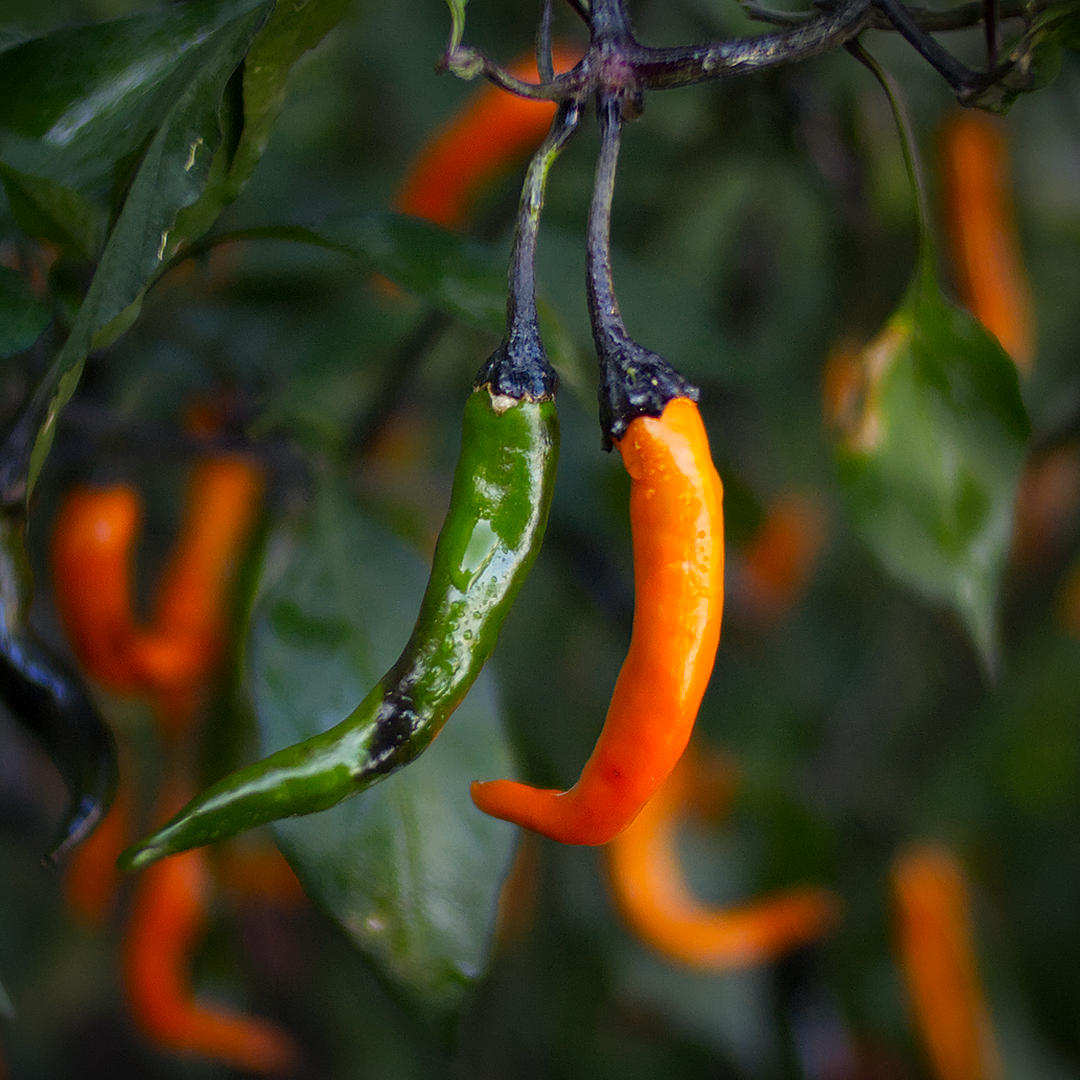
Green pods ripen to orange as their pigments change.
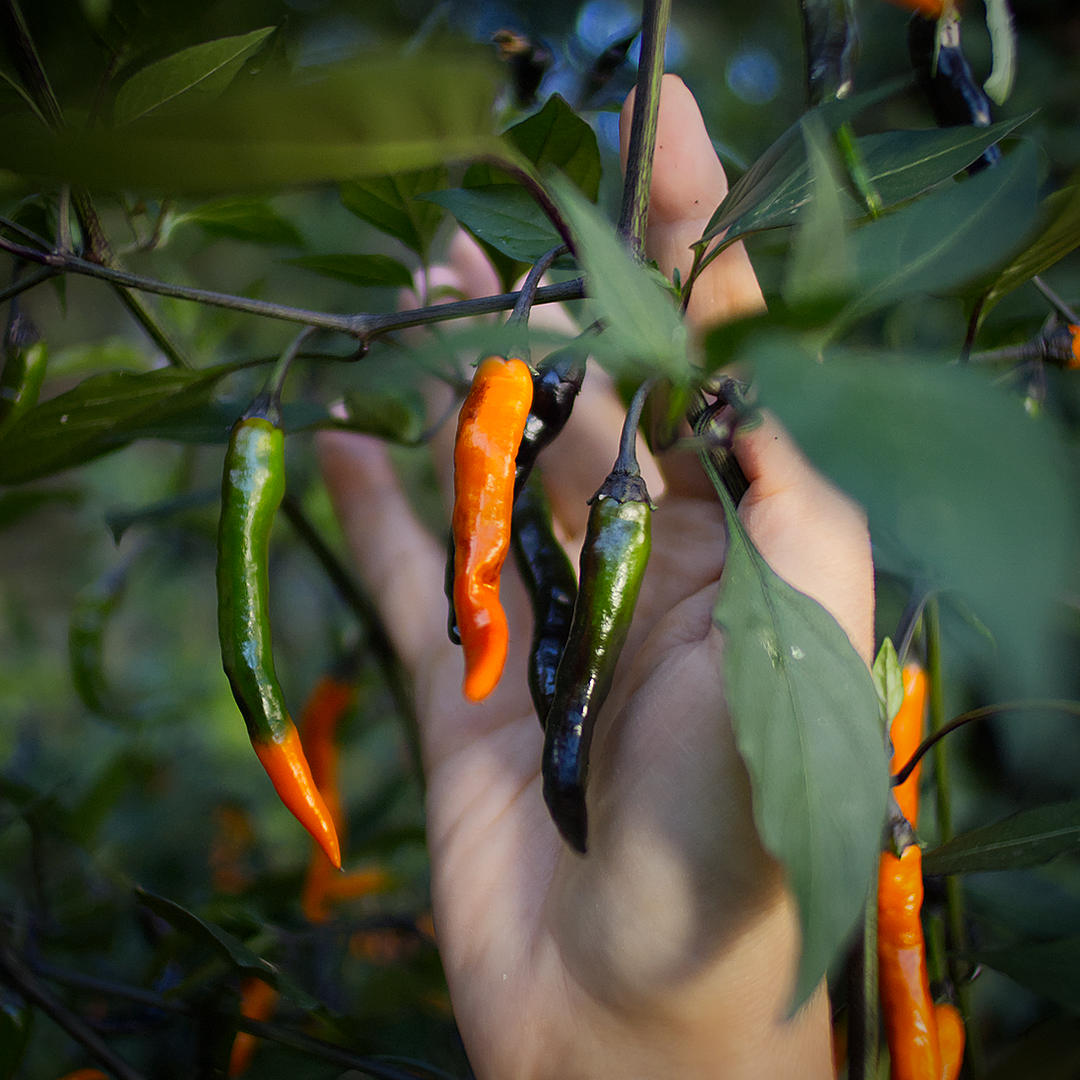
Green, black and orange pods at different ripening stages.
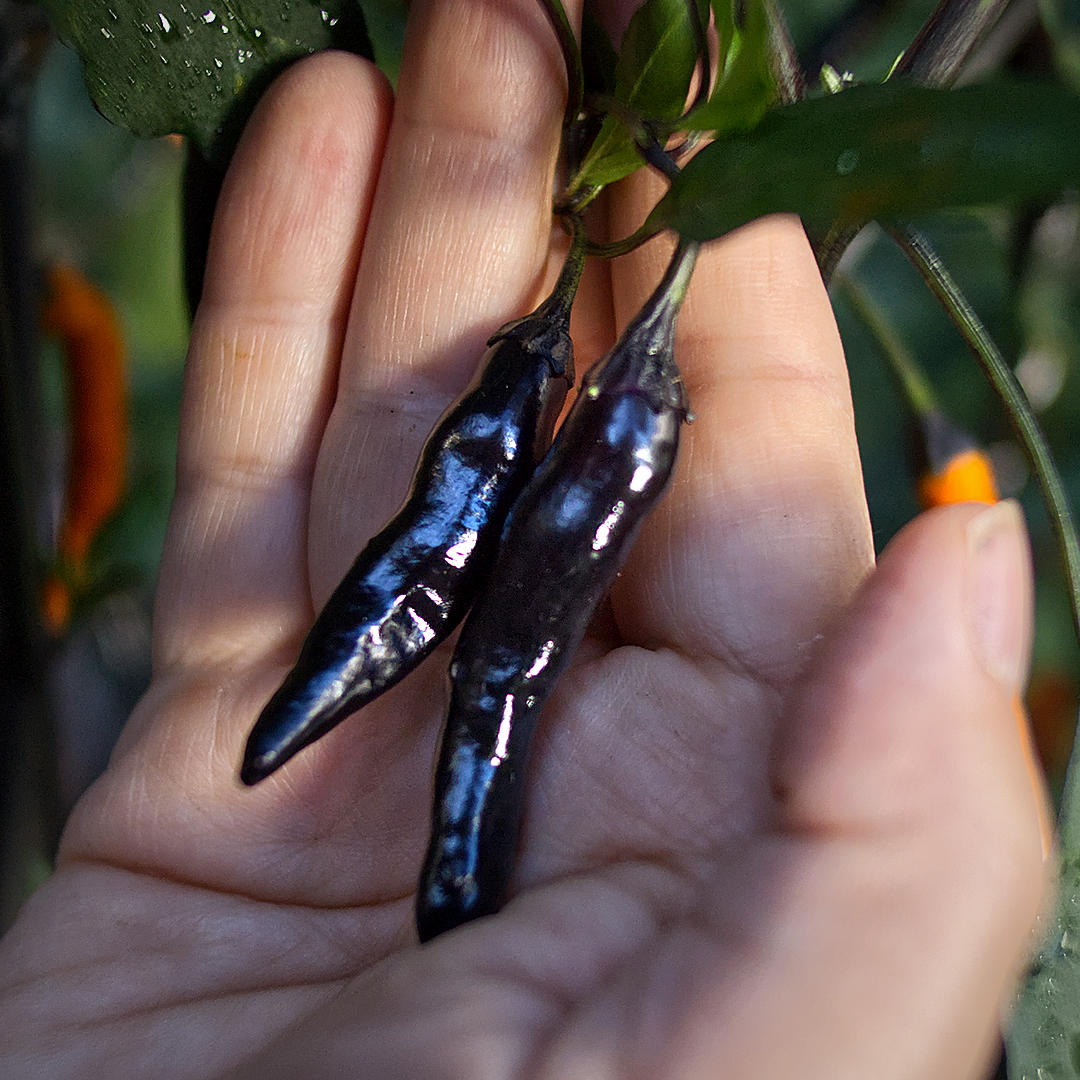
Anthocyanins and chlorophyll produce the almost-black colouring.
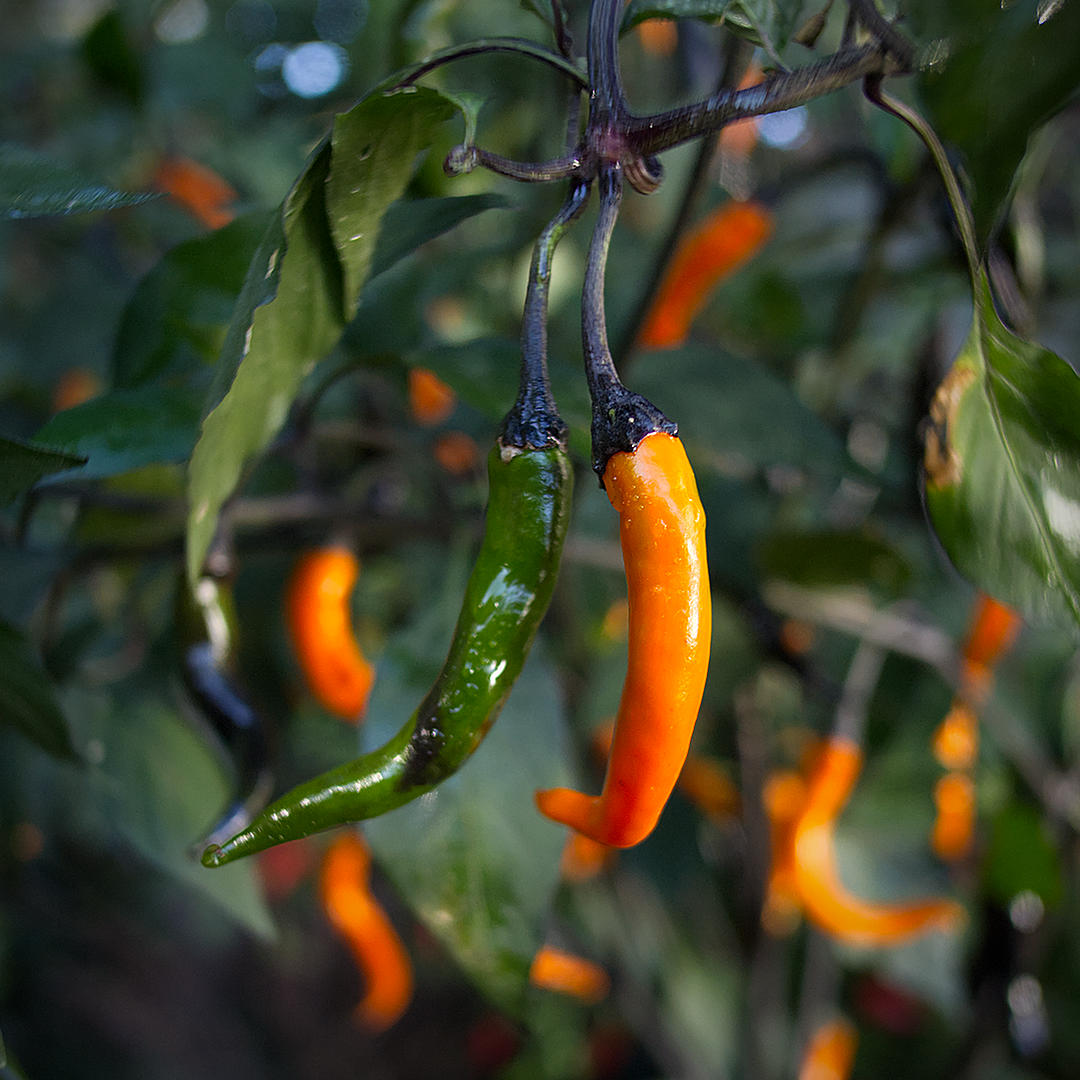
Orange carotenoids become prominent as the chillies ripen.

My prolific plant, laden with bright orange chillies.
Halloween for just £2.95
If Thai Halloween has caught your eye, it's on special offer this week for £2.95 when added to any order. Offer ends 7th November.
Our 2027 chilli plant pre-orders are now open, with 15% off last season's prices. We've also created a new page bringing together all the new varieties, including some that will only be available on pre-order because we grow them specifically to order.
And remember, if you've already placed a pre-order, you can keep adding plants until pre-orders close and only pay postage once. Just leave us a note at checkout saying it's an addition to your existing order, and we'll refund the extra postage.
Do have a look at the new varieties. There are some rather unusual additions you won't want to miss.
World of Chillies was set up by Sarah Hunt in 2011 to promote chilli growing and the enjoyment of everything hot and spicy.
UK Company No. 07860204.
VAT reg. 223126942
▶ 1. Heat (Hotness): The defining characteristic for most people. Is it mild, medium, or hot? How does the heat develop?
▶ 2. Sweetness: The balance of natural sugars. Some chillies have a sweetness that complements their heat.
▶ 3. Fruitiness: The aromatic, flavour profile. Does it taste tropical, citrusy, or like berries? This quality lends chillies their distinctive edge.
▶ 4. Crunchiness or Firmness (texture): Freshness matters. Is the chilli crunchy or soft, or somewhere in between?
▶ 5. Juiciness: How much moisture does the chilli release? This can influence its suitability for fresh eating or cooking.
▶ 6. Aftertaste (Complexity): What lingers after the initial bite? Is there a smokiness, an earthiness, or a clean finish?
▶ Schedule of Dispatches . We’re pleased to let you know that we’re preparing to dispatch our first plug plants!. Please follow the link for a rough schedule, but please note that we’ll send your order once everything in it is ready.
▶ MORE INFORMATION
▶ Schedule of Dispatches . We’re pleased to let you know that we’re dispatching our first plug plants!.
Please follow the link for a rough schedule, but please note that we’ll send your order once everything in it is ready.
▶ MORE INFORMATION