Chilli of the Week - Lemon Habanero
Chilli of the Week - Lemon Habanero
Golden Havoc: My Year Growing the Lemon Habanero
I’ve grown Lemon Habanero plug plants for years, quietly admiring their determined, cheery spirit. For a Chinense, they’re surprisingly well-behaved—lush, green, fast-growing, and blissfully uniform, unlike some of their wilder relatives that seem to take great pleasure in defying expectations.
But—and I say this with a tinge of guilt—I had never actually grown one to full size. Not until 2024. This was the year I finally saw a Lemon Habanero in all its fiery, fruit-laden glory. And now, having done so, I can only conclude that I have been missing out spectacularly.
Now, I’ve always had a soft spot for the Orange Habanero—it’s a chilli that has never let me down, my all-time favourite, a reliable friend in the garden and the kitchen.
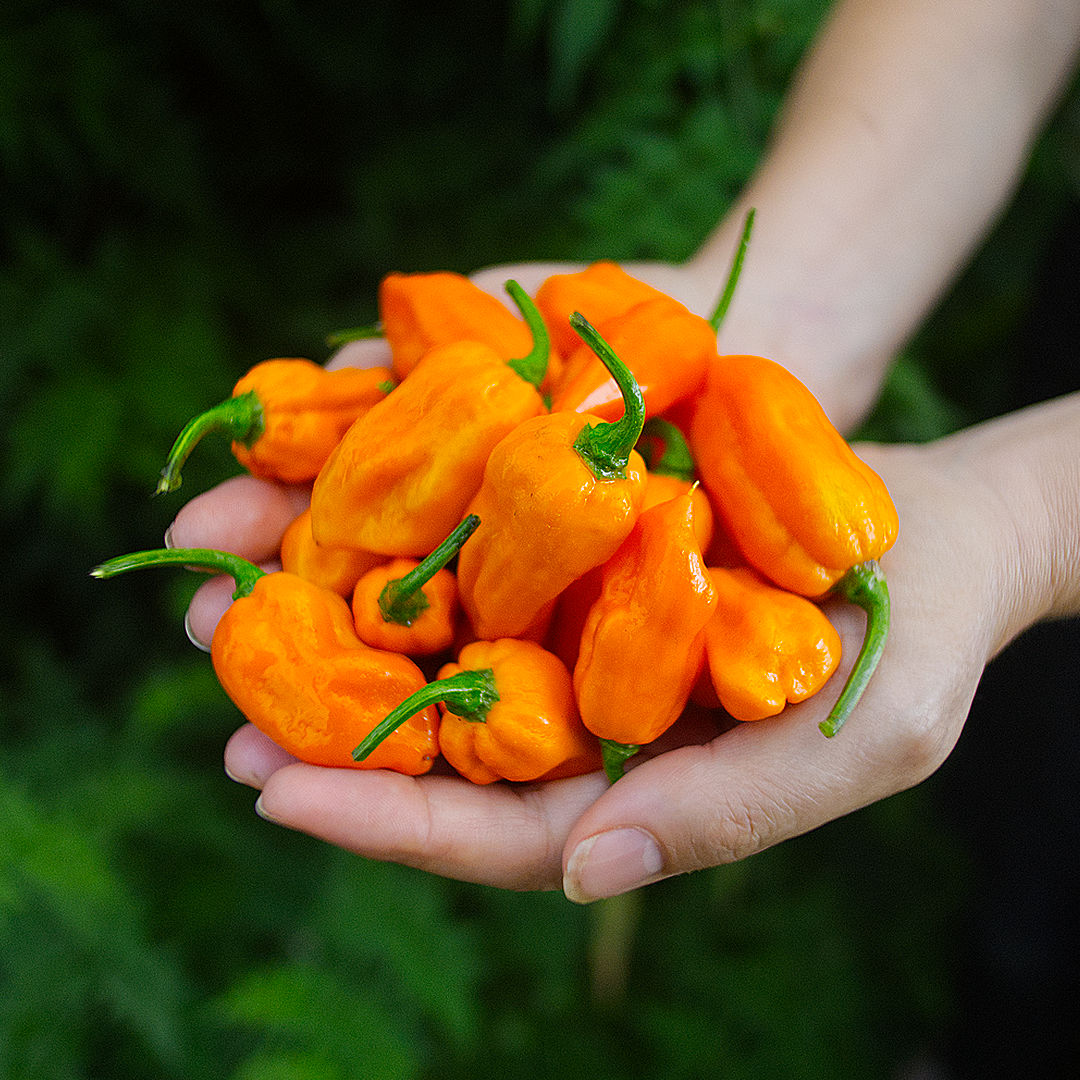
But I decided that, after all these years, it was time to give its lemon-hued cousin a proper go. I was not disappointed. The plant, true to form, grew with a breezy confidence, broad and sturdy, throwing out long, arching branches that soon became heavy with glossy pods. It wasn’t just prolific—it was exuberant. The kind of plant that makes you feel like a particularly competent gardener, even if you’ve done nothing to deserve it.
Flavour Profile
▶ Heat (Hotness): 7. Between 300,000 and 400,000 SHU—so yes, it’s hot, but not brutish. The burn arrives not like a tidal wave, but like a politely dressed lunatic who taps you on the shoulder, smiles warmly, and then ignites your collar. It’s all very sudden, and oddly civilised. There’s no crescendo—just a bright, flamboyant detonation. The kind of heat that doesn’t warn you, but expects you to keep up.
▶ Sweetness: 6. There’s an almost courtly sweetness here—subtle, genteel, like lemon curd served in a crumbling orangery. It’s not dessert-sweet, but it does lean in with a trace of honeyed charm. The kind of flavour that makes you suspicious—like a handwritten apology from someone who’s just set your shed on fire.
▶ Fruitiness: 8. This is where the Lemon Habanero goes off-script. A full-tilt tropical riot—lemon zest, passionfruit, and maybe even a jab of pineapple—all jammed into a pod the size of your thumb. It’s like licking a citrus battery during a samba parade. Bright, electric, and deeply untrustworthy in the best possible way.
▶ Texture (Crunchiness or Firmness): 6. The skin is thin, but not flimsy. Bite into it and there’s a neat little snap, like the sound of a well-cut card in a magician’s deck. It doesn’t gush or crumble—it holds its nerve. Satisfying to slice, even more so to scatter thinly into a salsa and pretend you haven’t just unleashed chaos.
▶ Juiciness: 5. It won’t soak your chopping board, but it will send out a citrus vapour trail that clings to your fingers and makes your kitchen smell like a lemon grove haunted by ghosts of old heatwaves. The flesh is firm, not wet—but packed with aroma. You’ll want to sniff your fingertips afterwards, and possibly question your life choices.
▶ Aftertaste (Complexity): 7. Once the fireworks fade, something lingers—an echo of lemon peel, mango, and maybe citronella oil stolen from a witch’s garden. It’s fragrant, strangely mournful, and weirdly sophisticated. Like the last line of a letter you were never meant to read. There’s a sense you’ve tasted something important… and slightly illicit.
But the real revelation came when the fruit began to ripen. Like most people, I’d assumed the "Lemon" in Lemon Habanero was all about the colour. It turns out that’s only half the story. The fruit doesn’t stay yellow—at full ripeness, it takes on a deep golden glow, almost indistinguishable from the Orange Habanero at a glance.
For a brief and slightly embarrassing period, I was convinced there had been a mix-up. Had I actually grown an Orange Habanero by mistake? Was my great Lemon Habanero Experiment about to end in farce? Thankfully, the pods themselves gave the game away. Unlike the smooth-skinned, tidy Orange Habanero, the Lemon has a more undulating, gently wrinkled surface, tapering to a delicate, pointed tip.
And then, of course, there’s the flavour. This is where the Lemon Habanero truly distinguishes itself. The same wild, floral fruitiness as its orange cousin—but with an edge. Sharper, brighter, unmistakably citrusy.
The first bite delivers that classic habanero explosion, but this time with a mouth-watering tang—a sour, zesty punch that leans into its name with gusto. It’s less tropical fruit, more feral lemon grove—and I was instantly hooked.
The plant produced two strong harvests—one from late August into September, and a smaller, more reserved second flush in late autumn. More than enough to justify its place in the garden.
And when it came time for the Christmas Chilli Jelly, the Lemon Habanero proved its worth once again, pairing brilliantly with the Yellow Moruga to create a fierce, fruity, utterly addictive concoction that went down dangerously well as a gift.
Golden Heat Awaits – Grow Lemon Habanero
It’s fair to say that the Lemon Habanero has been living in the shadow of its more famous orange cousin for too long. But trust me, if you’ve never grown it, you’re missing a trick. Big yields, stunning colour, and that unforgettable citrus sting—this one’s a keeper.
World of Chillies was set up by Sarah Hunt in 2011 to promote chilli growing and the enjoyment of everything hot and spicy.
UK Company No. 07860204.
VAT reg. 223126942
▶ 1. Heat (Hotness): The defining characteristic for most people. Is it mild, medium, or hot? How does the heat develop—immediate or lingering?
▶ 2. Sweetness: The balance of natural sugars. Some chillies have a sweetness that complements their heat and makes them versatile in cooking.
▶ 3. Fruitiness: The aromatic, flavour-forward profile. Does it taste tropical, citrusy, or like berries? This quality often gives chillies their distinctive edge.
▶ 4. Crunchiness or Firmness (texture): Freshness matters. Is the chilli crisp and crunchy, soft and pliable, or somewhere in between?
▶ 5. Juiciness: How much moisture does the chilli release when bitten into? This can influence its suitability for fresh eating or cooking.
▶ 6. Aftertaste (Complexity): What lingers after the initial bite? Is there a smokiness, an earthiness, or a clean, simple finish? This often separates "nice" chillies from truly memorable ones.
Pick up a Lemon Habanero for just £1.95 in this week’s Chilli of the Week offer.