-
capsicum baccatum What sort of chilli is this?
The quick picture
- Temperament: lively, open growing
- Typical heat: mild → medium hot
- UK success: very reliable outdoors
- Time to fruit: mid-season but abundant
- Best role: brightening food

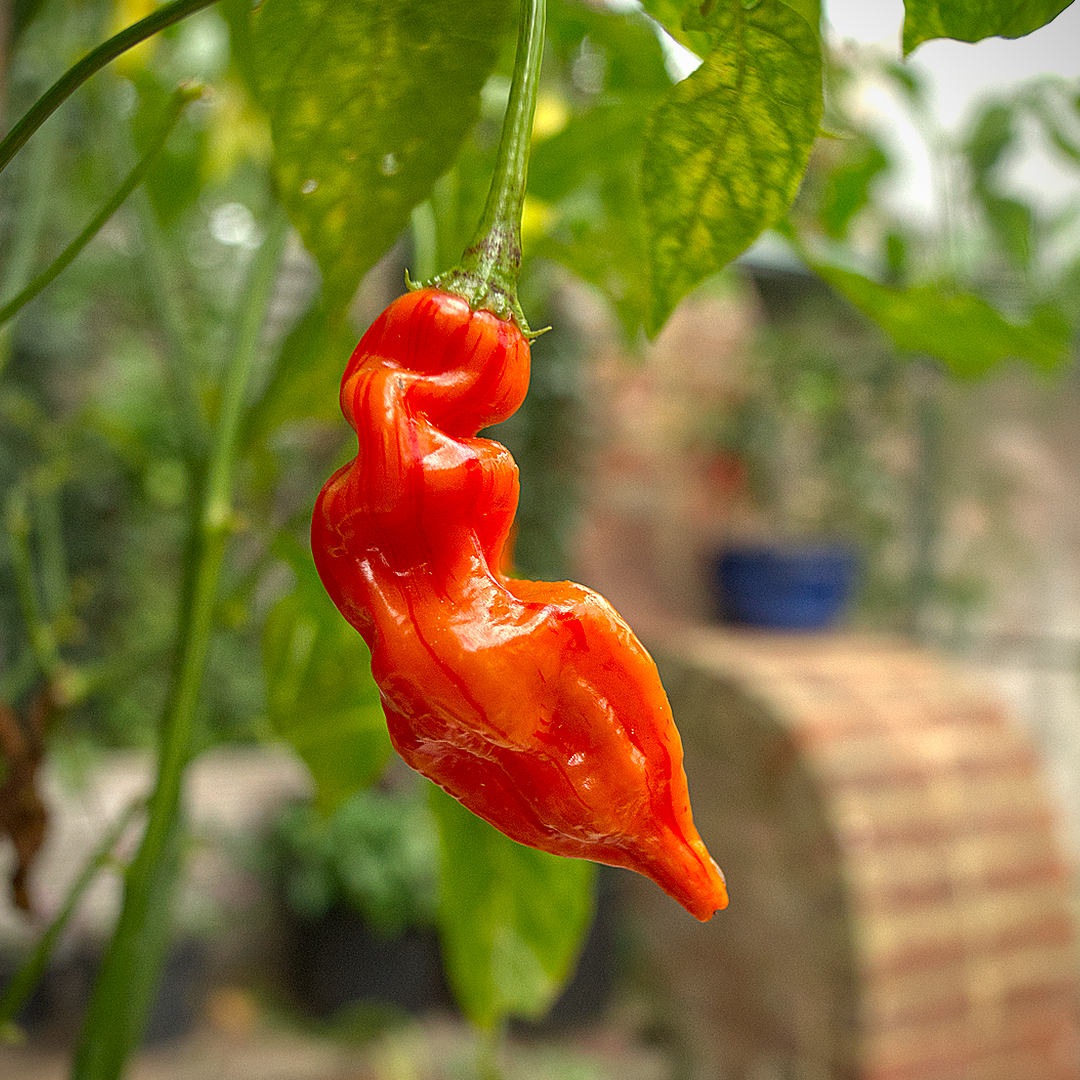
The weirdly-shaped Bishop's Crown baccatum chilli
-
capsicum baccatum How to recognise it
What to look for
- white flowers with yellow or green spots
- tall branching plants
- thin-walled hanging pods
- often fruits in clusters
- usually ripens to clear colours (yellow, orange, red)
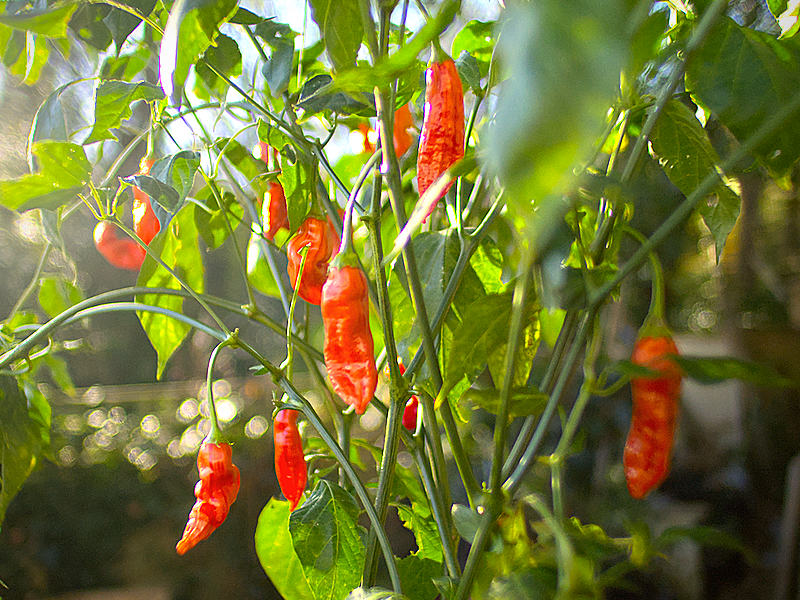
A sprawling Sugar Rush Stripey
-
capsicum baccatum Why does it grow like that?
Where it comes from
This species comes from the Andean regions of South America — places with sun, cooler nights and a defined growing season. Instead of waiting for endless heat, it takes advantage of light and airflow.
That’s why it behaves so comfortably in Britain: our summers resemble a gentle version of its native climate.It’s adapted to constant heat, so in Britain it spends a long time doing very little before fruiting.
-
capsicum baccatum Have I eaten this before?
Familiar varieties
• Peruvian aji amarillo
• Peruvian aji limón (Lemon Drop)
• Brazilian starfish
• Ecuadorian Oro de Ecuador
• Sugar Rush Stripey (baccatum type)
• Bishop’s Crown (widely grown; origin not cleanly documented)
• Madre Vieja (often attributed to SW Guatemala)
-

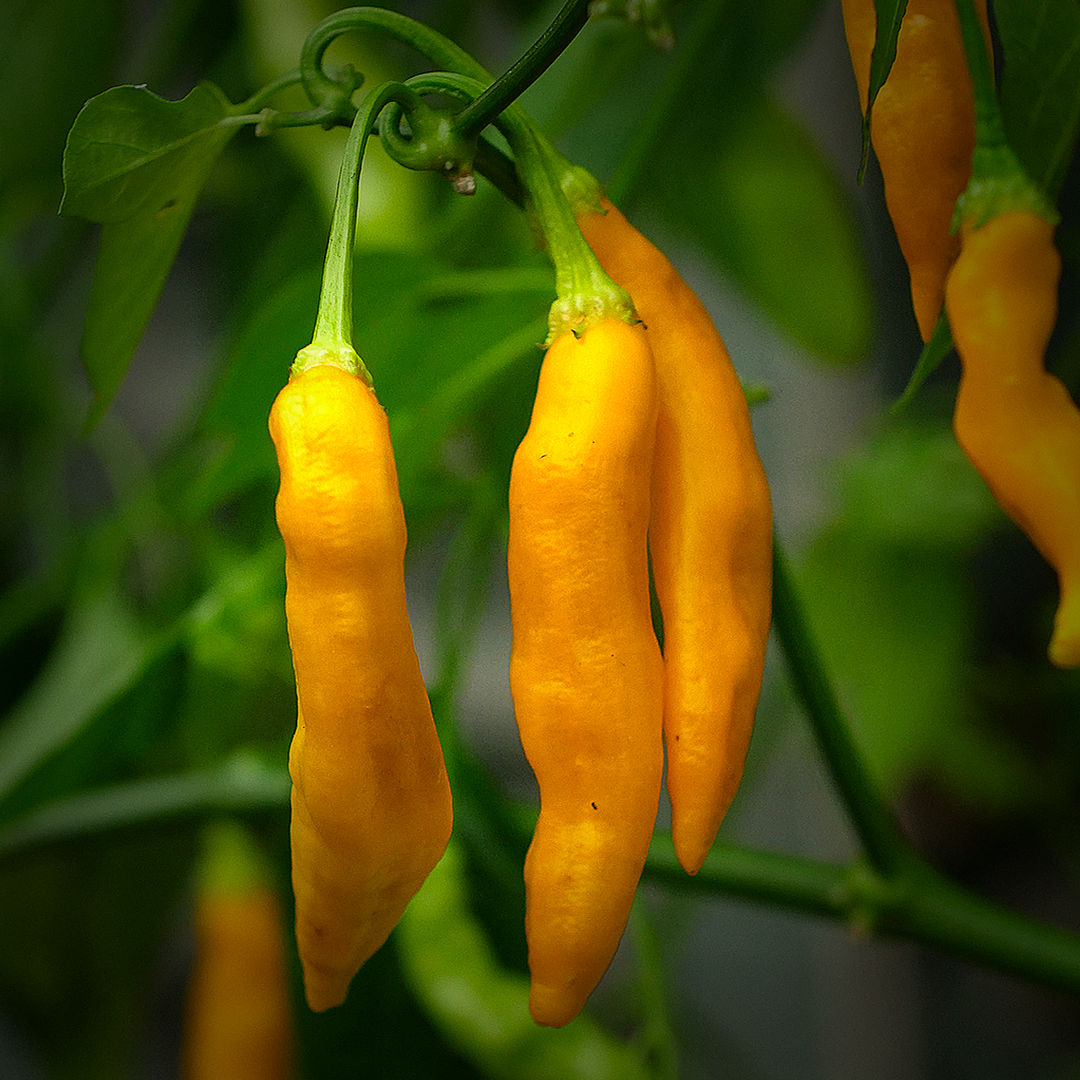
the golden orbs of the Oro de Equador.
-

Lemon Aji is a favourite baccatum chilli.
-

Sugar Rush Stripey; a super pickling chilli with a sweet, crisp bite.
-

Madre Vieja from Guatemala is one of the hottest bacctaum chillies.
-
-
capsicum baccatum How hot is it really?
The heat character
You taste the fruit as much as heat. It warms rather than overwhelms, and fades quickly enough to keep eating.
Typical range: 5,000 – 50,000 SHU
-
capsicum baccatum What do people use it for?
In cooking
Here the chilli lifts the food rather than defining it.
- fresh in salsas and relishes
- sliced into salads
- quick pickles
- bright sauces where the chilli stays noticeable
- everyday table heat
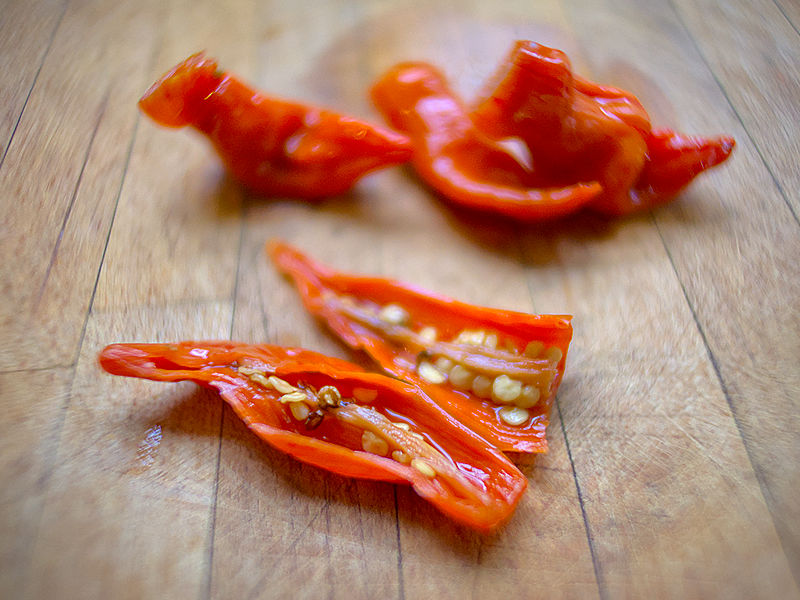
Pickled Sugar Rush Stripey chilli
-
capsicum baccatum Will it grow for me?
In UK climate
- Usually the easiest of the more interesting species.
- What helps: light, airflow, regular picking
- What confuses growers: plants growing tall before fruiting
- Reality: once it starts, it rarely stops

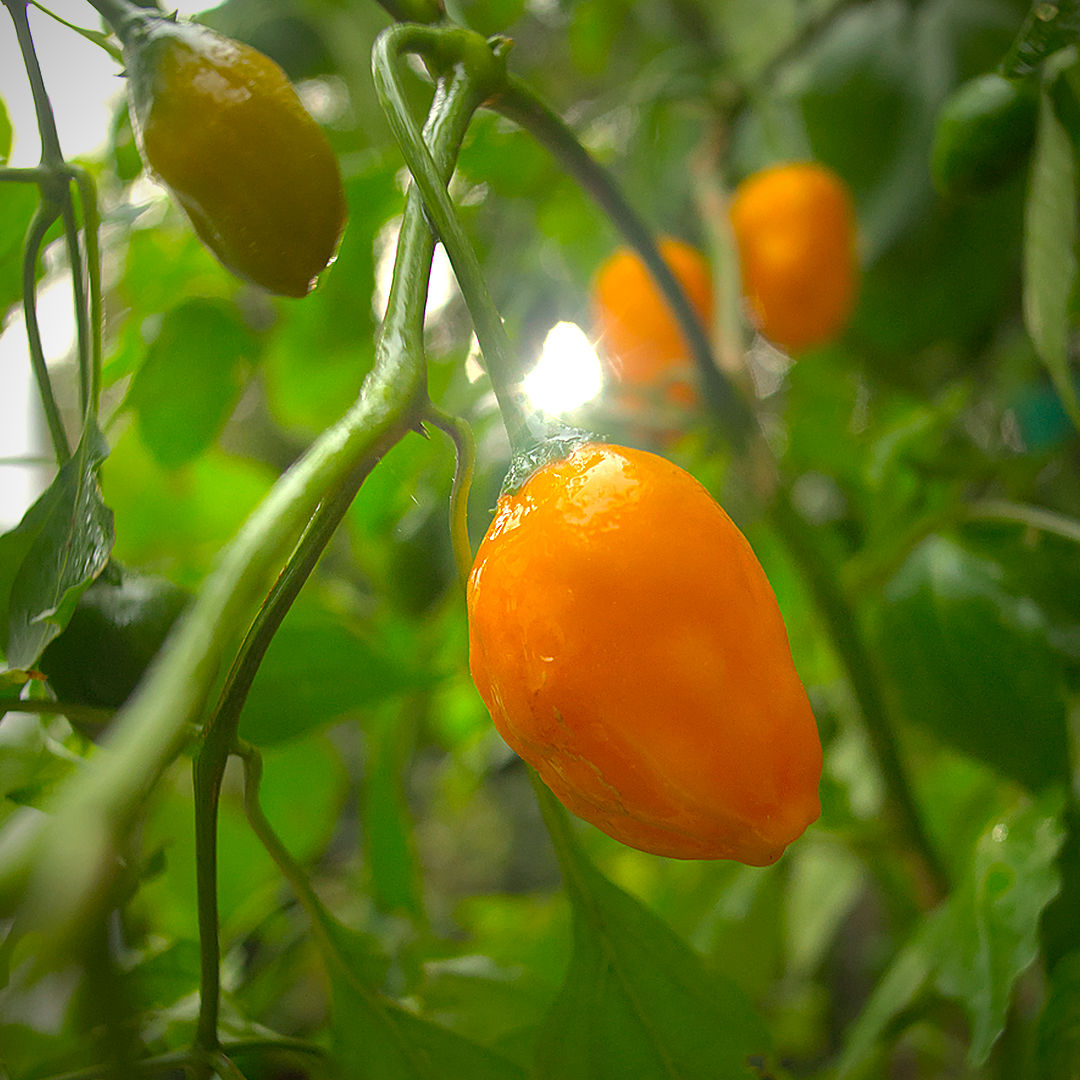
Oro de Ecuador (Gold of Ecuador) chilli, UK grown
-
capsicum baccatum Where it falls short
Its limitations
- rarely intensely hot
- loses brightness in long cooking
- drying removes much of its fresh character
-
capsicum baccatum So what’s the point of it?
The takeaway
This is the chilli that keeps food lively. Not a challenge and not background heat — it stays noticeable in the dish rather than disappearing into it.
In the garden it behaves the same way: generous plants, repeated harvests, and plenty to share. With this species success is measured in bowls rather than individual fruits.

Brazilian Starfish; another strangely shaped baccatum
-
More Chillies
Other Chilli Species
Find out more about the other major species of chillies.
Annuum — the world’s cooking chillies
Chinense — the super-hot group
Frutescens — small upright sauce peppers
Pubescens — thick-fleshed mountain chillies
Chilli Species — main menu
The bright chillies of the Andes
The bright chillies of the Andes
You notice Capsicum baccatum before you taste it. The plants grow taller than expected, branching loosely and carrying dangling fruits that seem to arrive in numbers rather than singles. Where some chillies concentrate on intensity, this species deals in freshness — sharp, almost citrus notes that survive cooking rather than disappearing into it.
They also get on with the season. Once the light improves the plants move quickly, flowering freely and setting fruit without much persuasion. Compared with slower tropical species they feel optimistic, as if summer is assumed rather than awaited.


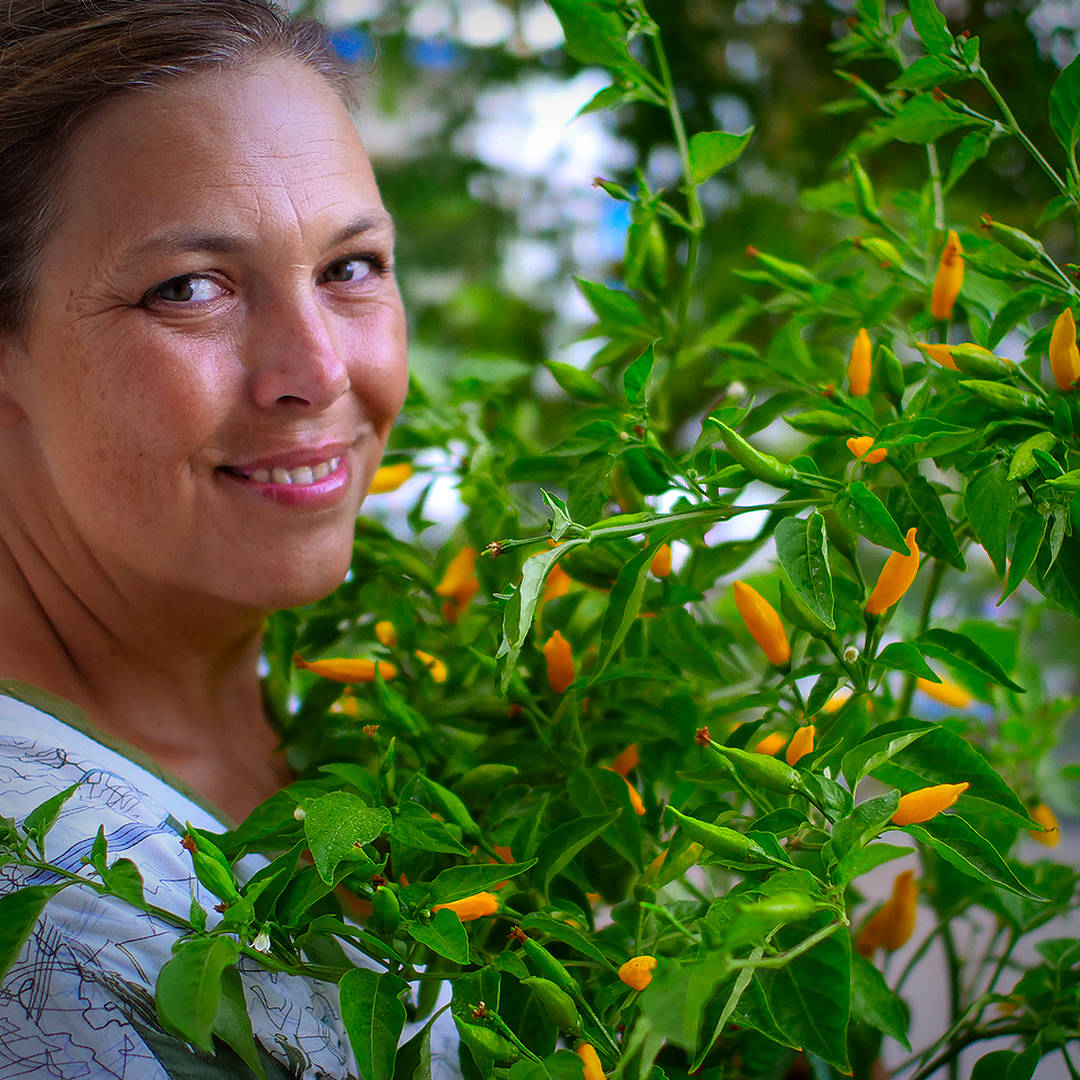
World of Chillies was set up by Sarah Hunt in 2011 to promote chilli growing and the enjoyment of everything hot and spicy.
UK Company No. 07860204.
VAT reg. 223126942
Originating in the Andean regions of South America, where cooler nights and clear seasons shaped its growth.
Here the famous naga and ghost chillies were bred for extreme pungency.
Scoville Heat Units (SHU) measure how hot a chilli feels — essentially how much capsaicin it contains. A Moruga Scorpion at about 2,000,000 SHU is roughly four hundred times hotter than a jalapeño at around 5,000 SHU.