-
capsicum frutescens What sort of chilli is this?
The quick picture
Direct heat, little fuss, very productive.
• Temperament: upright, constant fruiting
• Typical heat: medium → hot
• UK success: reliable indoors / warm summers
• Time to fruit: steady rather than sudden
• Best role: sauce and condiment chilli
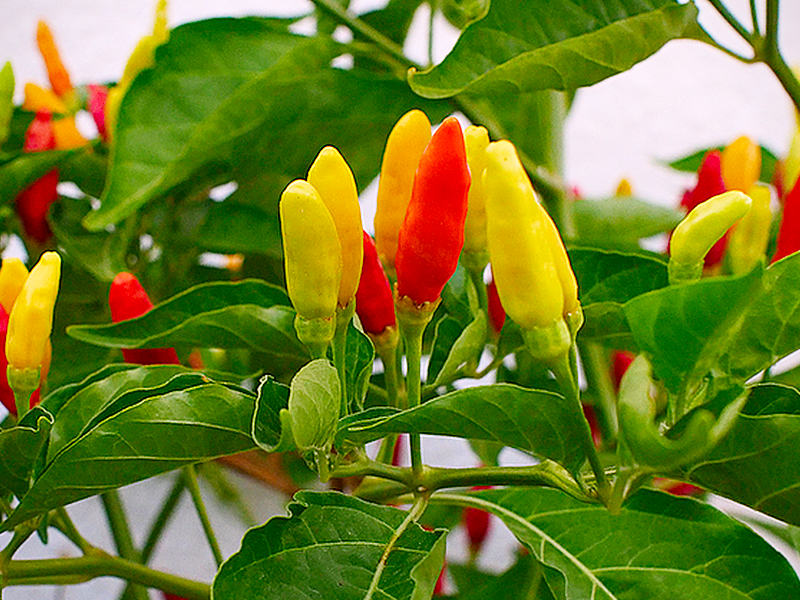
Tabasco; possibly the best-known frutescens chilli.
-
capsicum frutescens How to recognise it
What to look for
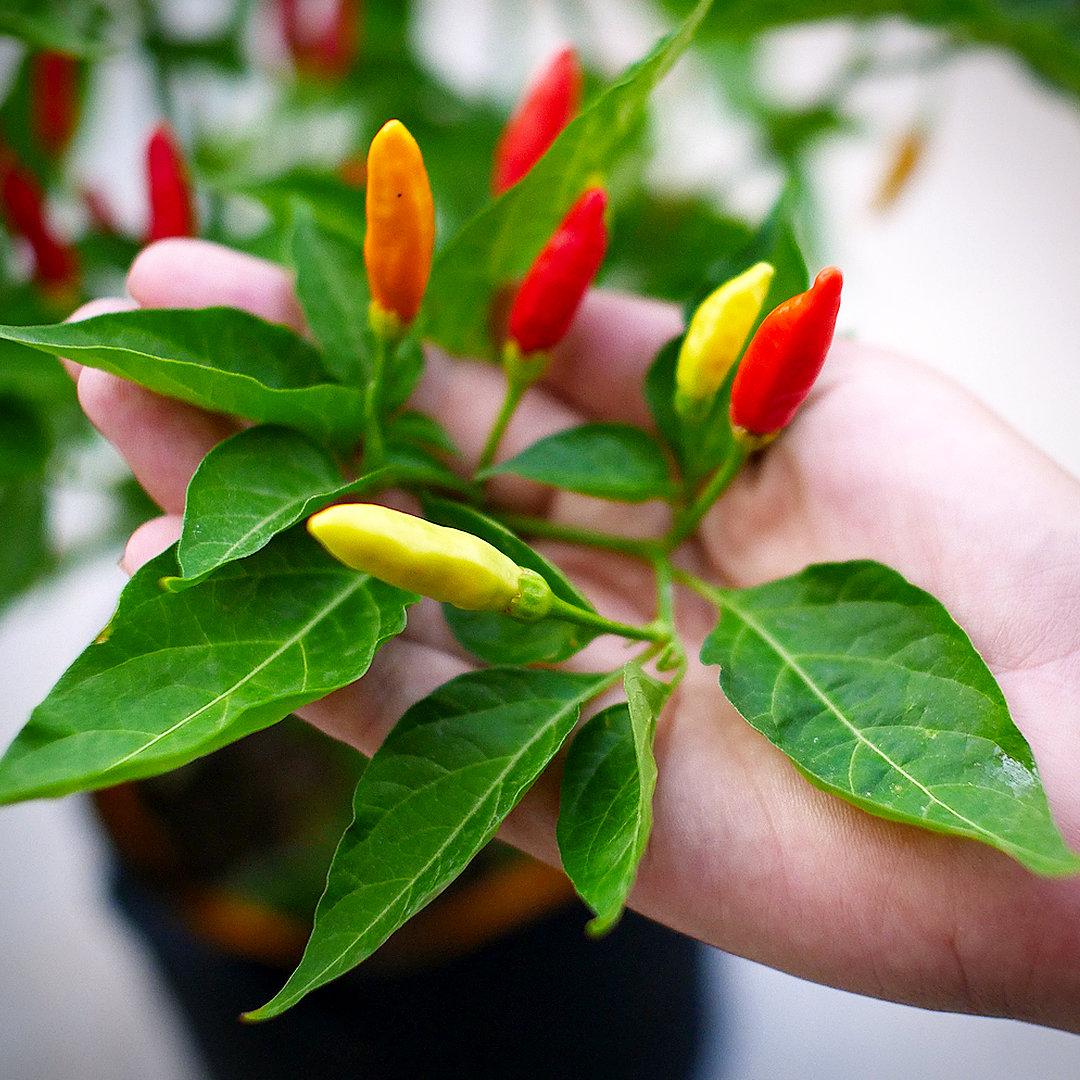
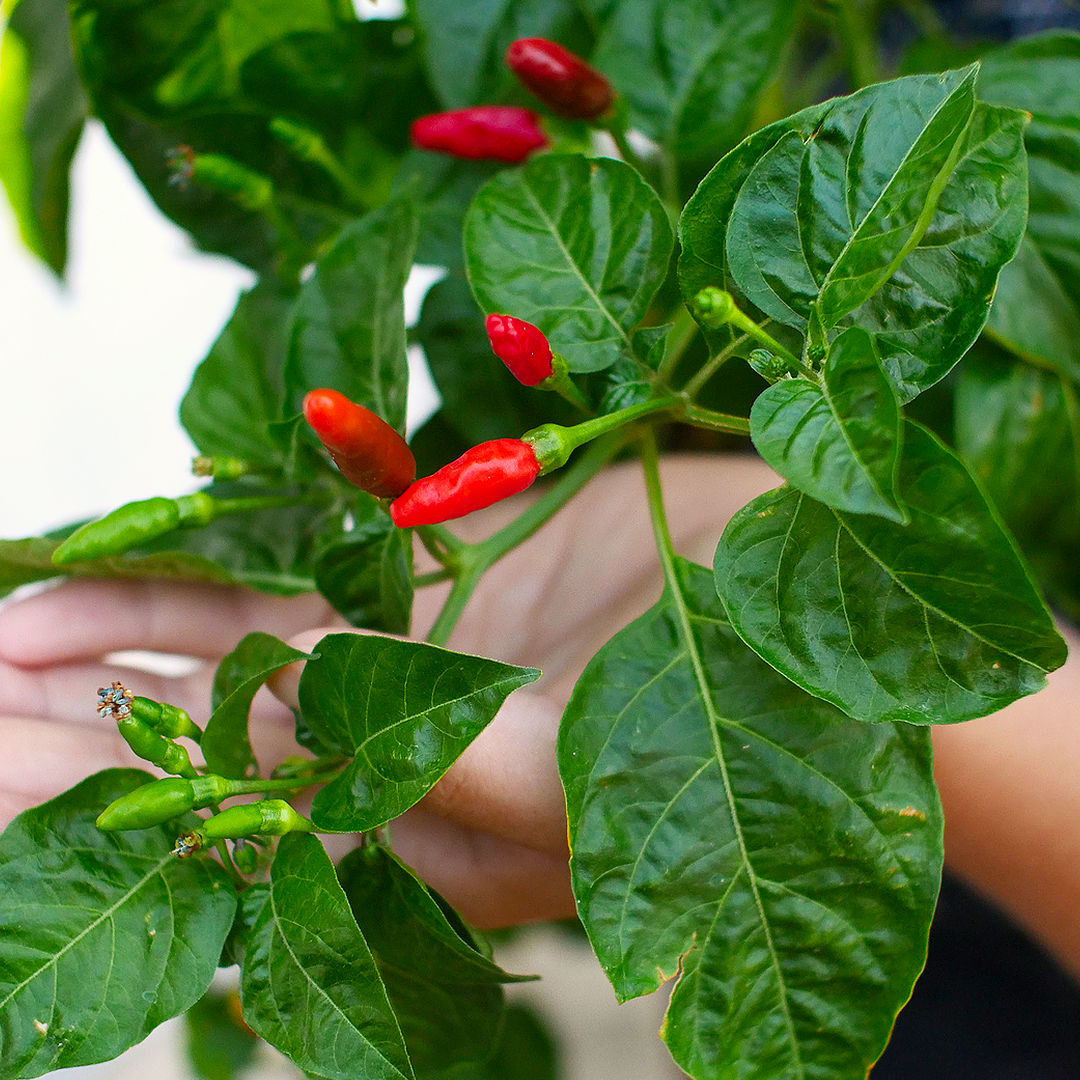
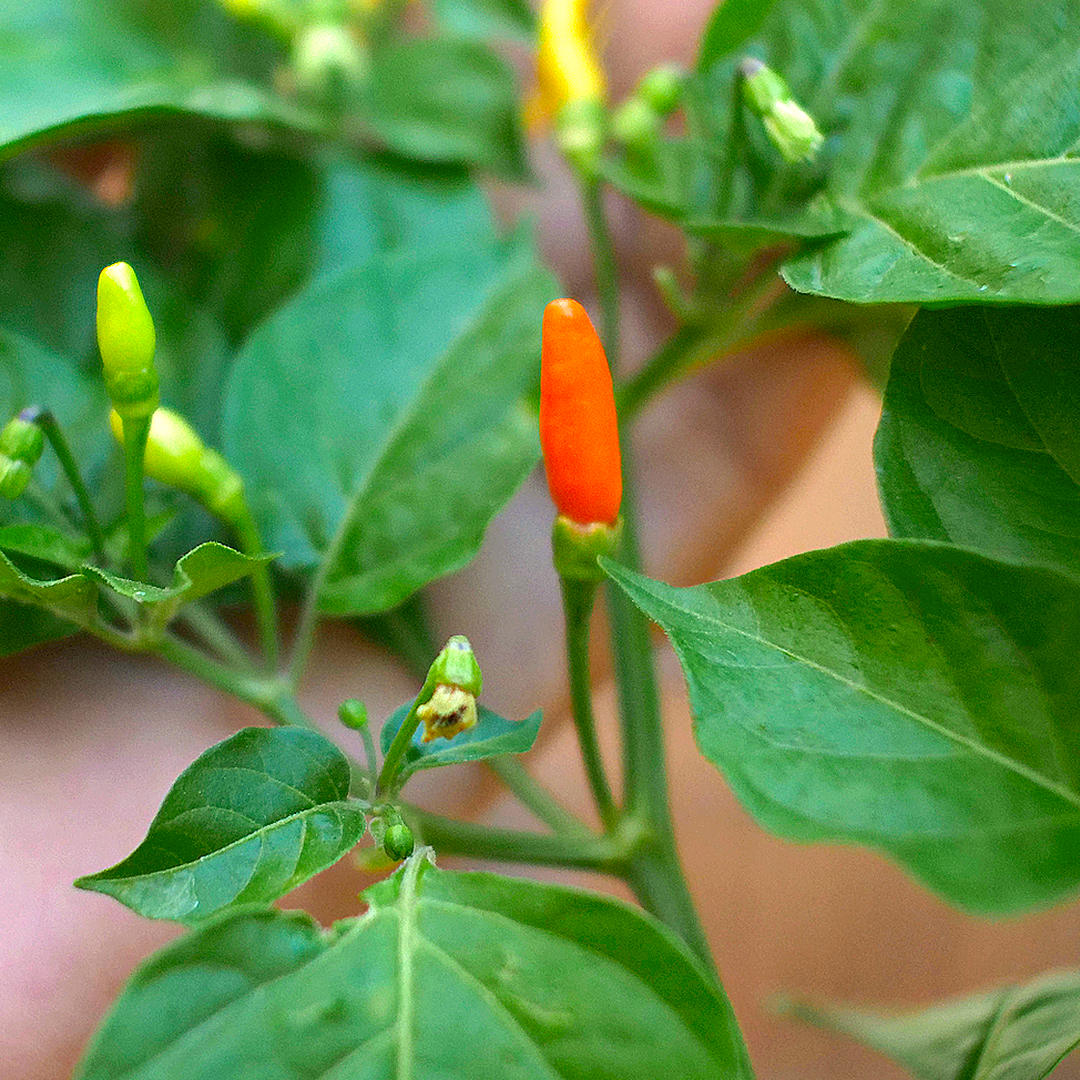
- small upright pods (often pointing upward)
- thin flesh
- many fruits at once
- narrow leaves
- fruits ripen green → yellow/orange → red
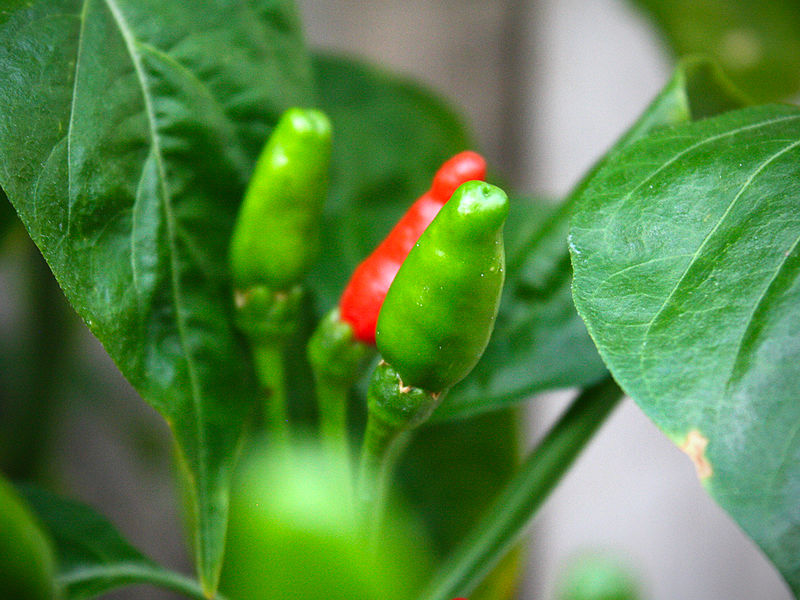
Upright pods of African Bird, a frutescens chilli.
-
capsicum frutescens Why does it grow like that?
Where it comes from
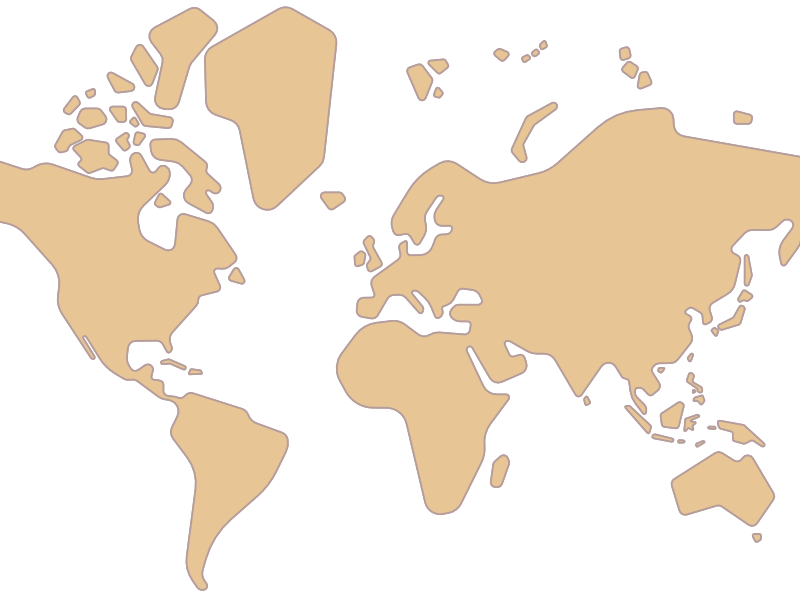
A tropical lowland species, widely spread through Southeast Asia and Central America.
In climates without winter the plants keep flowering continuously, so they evolved to produce small fruits often rather than large fruits occasionally. In Britain they behave best with warmth and shelter rather than open ground.
-
capsicum frutescens Have I eaten this before?
Familiar varieties
- Mexican Tabasco
- Brazilian malagueta
- Portuguese–African piri-piri
- Thai prik kee noo
- African Bird
- Indonesian rawit
-

Tabasco
-

African bird and piri-piri are closely related.
-

the upright characteristic of the frutescens
-

a ripeneing bush of Tabasco
-
capsicum frutescens How hot is it really?
The heat character
Immediate and clean — you feel it straight away, and it passes faster than chinense heat.
Typical range: 30,000 – 100,000 SHU

-
capsicum frutescens What do people use it for?
In cooking
Here the chilli sharpens food rather than perfumes it.
• fermented sauces (Tabasco-style)
• vinegar sauces
• table condiments
• stirred into dishes at the end
• everyday cooking heat
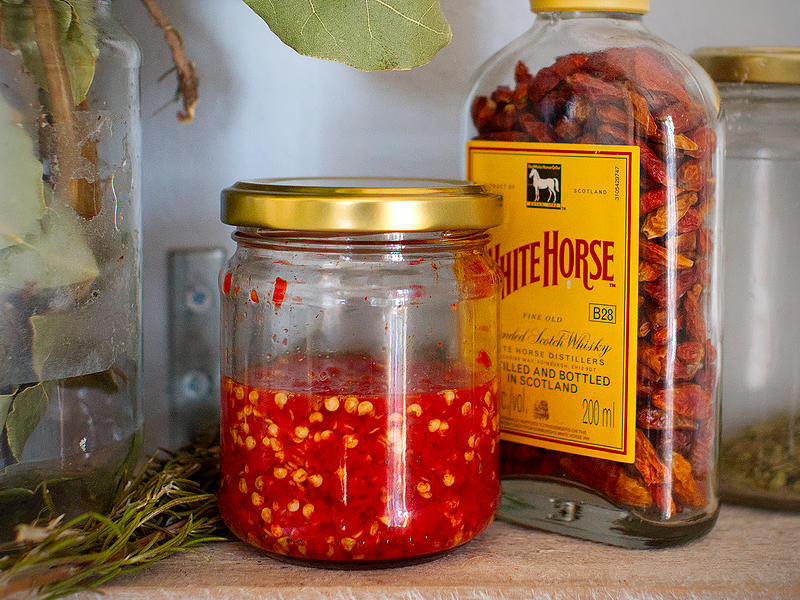
African Bird bought in Namibia being fermented.
-
capsicum frutescens Will it grow for me?
In UK climate
Happy in warmth and containers.
- What helps: consistent heat, light feeding
- What confuses growers: small pods but many of them
- Reality: more like a small shrub than a seasonal plant
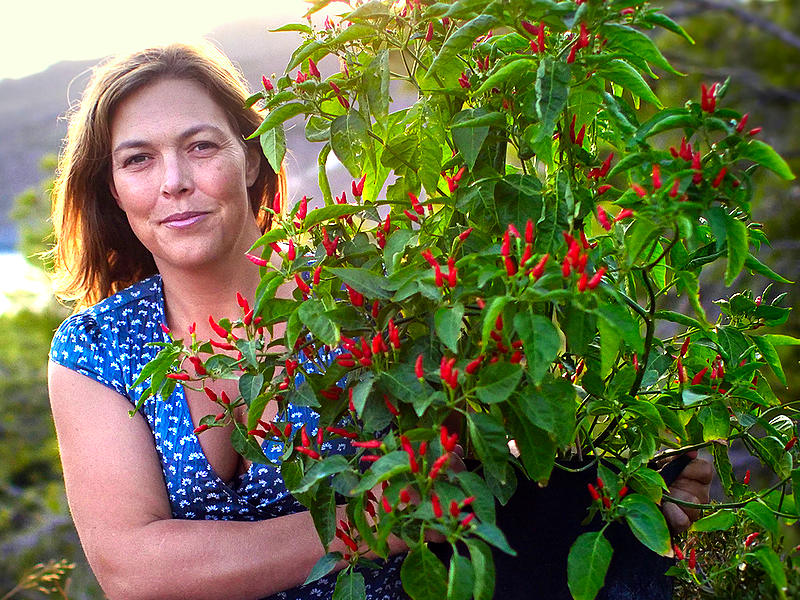
Frutescens chilli plants can grow into small bushes.
-
capsicum frutescens Where it falls short
Its limitations
- little sweetness
- rarely thick-fleshed
- not suited to stuffing or roasting
-
capsicum frutescens So what’s the point of it?
The takeaway
This is the chilli of condiments and table heat — the one that ends up in bottles rather than recipes. Used properly it doesn’t dominate a dish, it sharpens it.
In the garden it behaves the same way: steady plants, continuous picking, and a harvest measured over weeks rather than all at once.
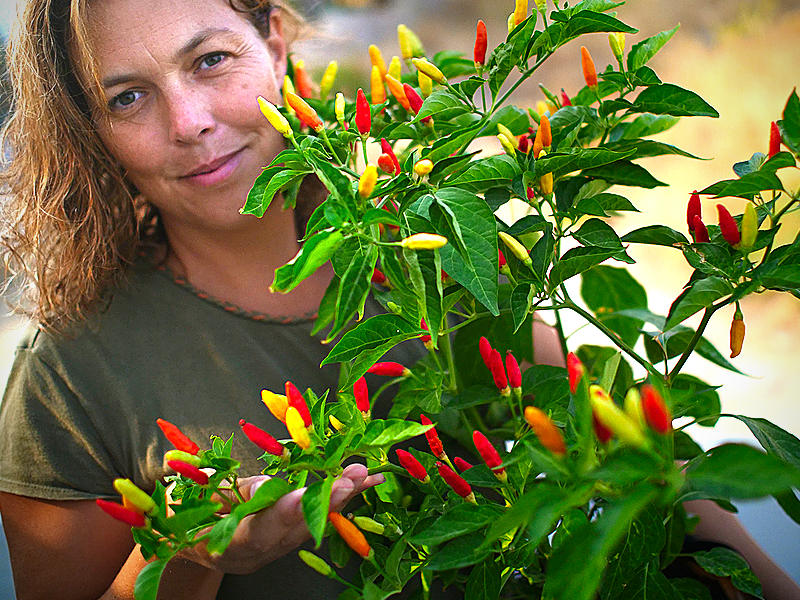
Why not make your own Tabasco hot sauce?
-
More Chillies
Other Chilli Species
Find out more about the other major species of chillies.
Annuum — the world’s cooking chillies
Chinense — the super-hot group
Baccatum — citrus-like from South America
Pubescens — thick-fleshed mountain chillies
Chilli Species — main menu
Small upright chillies with sharp, direct heat
Small upright chillies with sharp, direct heat
Some chillies you smell first, others you cook around. Capsicum frutescens doesn’t bother with either. Small upright fruits appear in numbers and deliver heat quickly and cleanly, without much sweetness or perfume. It’s the chilli of sauces and condiments — designed to be added rather than built around.
The plants behave the same way: compact, busy, and continuous. Instead of a single heavy crop they produce steadily, often holding ripe and unripe pods together. They feel less seasonal than most species, almost like a small perennial shrub.

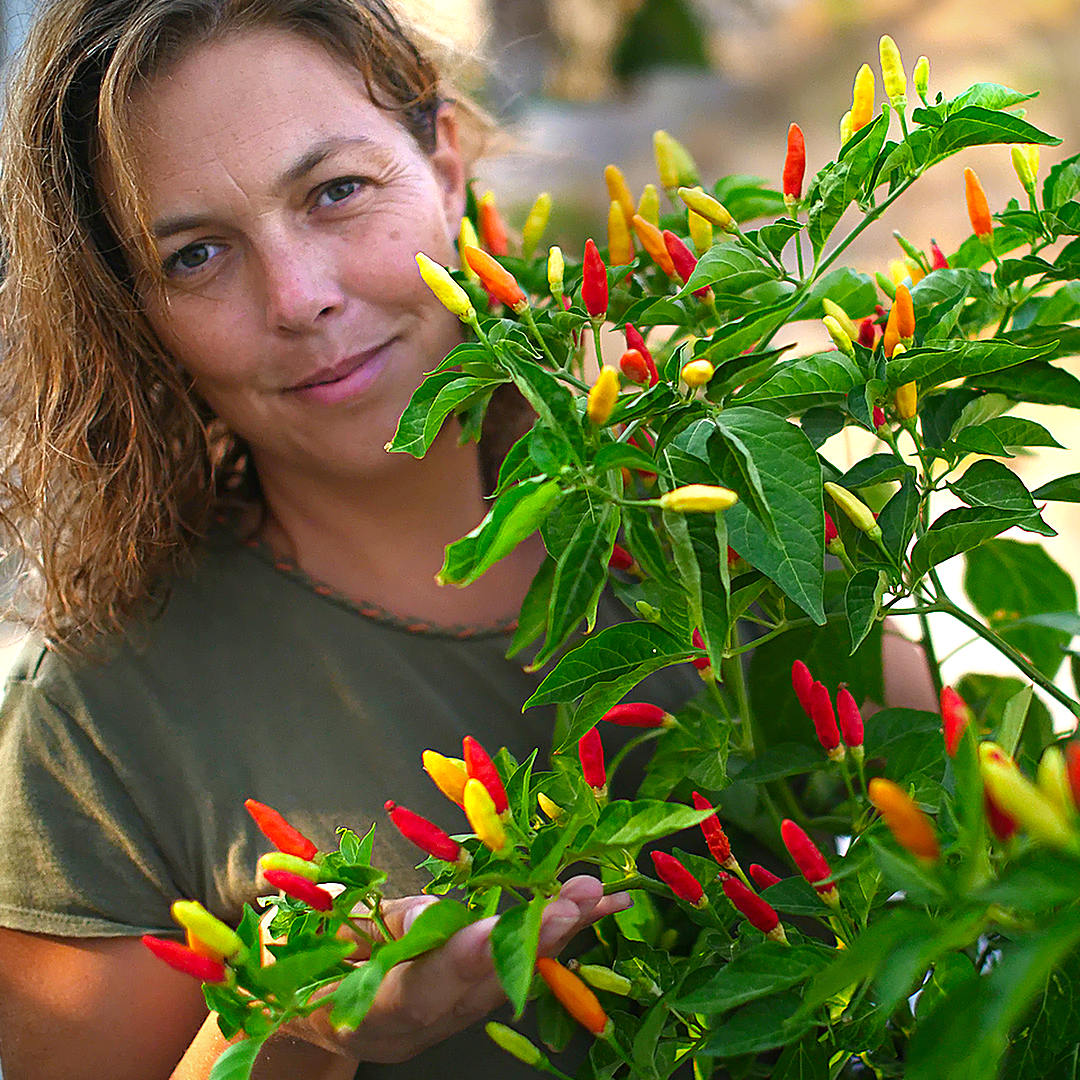
World of Chillies was set up by Sarah Hunt in 2011 to promote chilli growing and the enjoyment of everything hot and spicy.
UK Company No. 07860204.
VAT reg. 223126942
In Mexico and Brazil this is an everyday household chilli. Often kept at the table or added in small amounts to cooking. Selected over time for steady crops and dependable heat.
Along the southern African coast it became the base of many hot sauces. Frequently fermented or preserved rather than cooked for long. Valued for heat that stays clear in a finished dish.
Across Thailand and neighbouring regions it’s used in small amounts but constantly. Usually added late so the heat remains sharp. The plants suit humid climates and fruit repeatedly.
Scoville Heat Units (SHU) measure how hot a chilli feels — essentially how much capsaicin it contains. A Moruga Scorpion at about 2,000,000 SHU is roughly four hundred times hotter than a jalapeño at around 5,000 SHU.