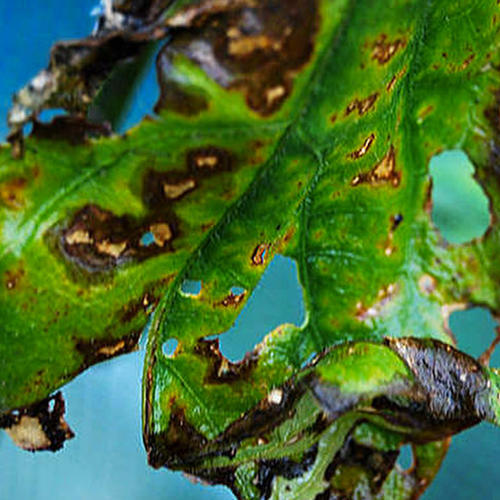
Chilli Pests
What's eating my plants?

Chilli Pests; Identify & Cure

Chilli Pests; Identify & Cure

A brief guide to some of the more common chilli pests and how best to irradiate or manage them. Also see our guide to problem prevention to try and stop these mini beasties before they get going.

Hang a few yellow paper sticky fly traps up in your greenhouse, you'll be surprised how many flying critters you'll catch and this will give you a good idea of what's about munching on your chilli plants too.

Aphids & Whitefly
Aphids & Whitefly

Greenhouse Aphids and Whitefly are amongst the most destructive of greenhouse pests, and they are now largely resistant to pesticides so can be extremely hard to irradiate. Sprays only have an effect on flying insects and not their young. They breed in large numbers, feed on plant sap and introduce plant disease. An infestation of these critters can completely ruin your chances of a good crop of chillies. Keep a careful check on your plants and deal with any unwanted intruders quickly.

  • SYMPTOMS
  • CURE

1. Flying insects around plants and larvae at growing tips and underside of leaves.
2. Discoloured patches on leaves.
3. Discarded white egg-casings at the soil top and on leaves.
4. Sticky residue on leaves, often with casings stuck to it.
4. The presence of ants, which farm aphids, placing them onto leaves so they can feed off larvae.
6. Twisted and distorted new growth.

Be vigilant and deal with as quickly as possible.

1. Gently wipe leaves with a damp cloth to remove as many larvae as possible.
2. A sprinkling of Derris dust or Diatomaceous Earth will help deter them.
3. These critters like greenhouse warmth so take your chilli plants outside for a few days.
4. Spray plants down with lightly pressured water from a hose, being careful not to damage plants.
5. There are a number of pesticide sprays that will help control populations but they won’t eradicate the problem. Remember that pesticides will also harm the good guys.
6. Encourage, or relocate, ladybirds into the greenhouse or you can purchase Aphidus (a parasitic wasp) and Aphidolites, both effective predators and these can be purchased online via defenders.com. This is the most effective way of banishing aphids.
7. Be vigilant and keep repeating your treatment.

Red Spider Mites
Red Spider Mites

These critters can be a big problem, particularly later in the season in the greenhouse. They are tiny and can be hard to spot, but in large numbers cause serious damage.

  • SYMPTOMS
  • CURE

1. A fine, pale mottling to the upper side of leaves.
2. In infestations, a fine grey webbing on leaves.
3. Loss of leaf colour.
4. Tiny moving dots and eggs on underside of leaves. Tap onto white paper & check for movement.

1. They favour dry conditions so lightly mist with water if conditions are dry.
2. There are a number of pesticides available or ''Nite Nite Spidermite' is an effective organic control.
4. Phytoseiulus is a natural predator of Spider Mites and can be bought online.

Thrips
Thrips

AKA Thunder Flies are tiny little winged insects around 2mm in length, ranging in colour from yellow to black, dependent on species. They damage plants by sucking the sap from leaves, buds and fruit and introducing infections.

  • SYMPTOMS
  • CURE

1. Speckled appearance on leaves which is actually hatching thrips, emerging from eggs buried into leaf tissue.
2. Distorted, misshapen developing leaves.
3. Bleached or browning spots or streaks on pods.
4. Silvery streaks on flower petals.
5. Browning patches on leaves.
6. Groups of adult thrips at veins on the underside of leaves.

1. They favour dry conditions so lightly mist with water if conditions are dry.
2. There are a number of pesticides available or ''Nite Nite Spidermite' is an effective organic control.
3. Phytoseiulus is a natural predator of Spider Mites and can be bought online.

Fungus Gnats
Fungus Gnats

In small numbers, these critters do not do much harm but in the case of an infestation, larvae seriously damage plant root systems. Overwatering and under-ventilation both encourage Fungus Gnats.

  • SYMPTOMS
  • CURE

1. Quite visible small black flies hovering aimlessly around the plants, particularly at the soil surface.
2. In infestations, edges of leaves become chlorotic, turning yellow & white because the plant cannot uptake enough water through damaged roots.

1. Bottom water to let soil top dry out.
2. Sprinkle surface with Diatomaceous Earth, or Fossil Flour, which cuts into their exoskeletons.
3. Yellow paper flytraps will catch surprisingly large numbers of adults.
4. ‘Gnat Off’ is an effective organic larvacide, added into plant feed until the infestation is eradicated.

Slugs & Snails
Slugs & Snails

These regular garden pests need no introduction. They can decimate chilli plants but are quite controllable if you are vigilant.

  • SYMPTOMS
  • CURE

1. Slime trails around the greenhouse.
2. Leaves munched around the outside.
3. Holes in pods.
4. The presence of slugs and snails!

1. Seek out and destroy regularly; salt baths, beer traps, porridge oats, copper tape, the scissors of mercy... everyone has their favourite deterrent or method of dispatch! Read about slugs and how to stop them here, here and here.

Pepper Maggots
Pepper Maggots

These yellowish grubs feed on the inside of pods causing them to ripen prematurely and drop.

  • SYMPTOMS
  • CURE

1. Pods dropping off plants at early stage.
2. Tiny maggot holes in pods.

Pick off the infected pods and destroy.

Growing tips from World of Chillies

world of chillies chilli edema

Chilli Problems

world of chillies pimeineto de padron being cooked

Chilli Blogs

world of chillies chillie deficiency in leaf

Chilli Nutrients

world of chillies potting on chilli

Potting On Chillies

world of chillies catepillar on chilli leaf

Chilli Pests

world of chillies chilli deficient leaf

Chilli Diseases


World of Chillies was set up by Sarah Hunt in 2011 to promote chilli growing and the enjoyment of everything hot and spicy.

UK Company No. 07860204.
VAT reg. 223126942